Category: Uncategorized

  • Some notes from Jim Bianco’s guest interview at Macro Voices podcast

    MacroVoices #341 Jim Bianco: Inflation Is Not Going Away

    • The economic conditions and order around the world are changing because of high inflation, I created some notes from Jims latest guest interview.
    • Previous low inflation was based on the concept of cheap labour and immigration and low energy prices
    • After the lockdowns many office workers decided to work from home and many resigned from their jobs following the government pandemic handouts. Large swaths of workers are finding it easier to find higher paying jobs now days and the opportunity to work from home.
    • Wages in the developing world have also gone up especially in the manufacturing sector in China, to make matters worse the US restrictions on technological trade with China have helped in lifting the cost of hi-tech products coming from China.
    • Cheap natural gas to European manufacturing powerhouse has ended, with natural gas prices up 600% over the past year with the Ukraine – Russia conflict. High energy costs are bad for the manufacturing base as they raise the price of energy, which is the most important input into manufacturing a product.
    • Jim also forecasts prolonged inflation hovering around 4-5% for the next couple of years as the tight monetary policy won’t have much of an effect on lowering the inflation to the old levels of 2-3%. Gone are the days of cheap credit and easy monetary expansion.
    • The great resignation has created a profound change in the employment sector causing wide shortages of staff and a bottleneck in the supply of workers.
    • The current Ukraine – Russia conflict has shown us that now days energy commodities can be used as a political weapon in wars. Current weapon is natural gas, where any move from EU in sanctions results in higher gas prices and the natural gas supply pipes coming from Russia being turned off for Western Europe. This in turn causes big damage to their manufacturing sector as it loses out to cheaper competitors in other parts of the globe.
    • The current world is globalised , so any disruptions in energy supply can cause turmoil in the manufacturing sector
    • Inflation will be persistent in the future; it’s not going anywhere.

  • AUD-RBA Monetary Policy Meeting Minutes

    Link

    https://www.rba.gov.au/monetary-policy/rba-board-minutes/2022/2022-09-06.html

    AUD

    Members noted that high coal and gas prices were supporting Australia’s terms of trade at record levels. In contrast to other energy commodities, crude oil prices were well below their peaks following Russia’s invasion of Ukraine. This decline reflected concerns about the global outlook and improved supply. Even so, the price of crude oil remained about 20 per cent above the level at the beginning of 2022. Limited spare capacity and gas-to-oil substitution in Europe and elsewhere were likely to support crude oil prices in the period ahead. Base metals and food commodity prices had been fairly steady over the preceding month, but had declined from the peaks reached after Russia’s invasion of Ukraine.

  • Past week review 

    The previous week saw some interesting results: 

    USD 

    Inflation ticked higher in the USA with the monthly CPI higher at 0.1% and the core CPI (excluding food and energy) at 0.6%, the latter result highlights the fact that the core inflation has leached into everyday consumer products, signaling a need for another rate rise by FED to try to lower inflation. 

    Monthly PPI came out as –0.1% as the prices of fuel have been steadily going down the past 2 months from their peak, but when we exclude food and energy at the core PPI, we get a monthly rise of 0.4% as inflation has affected consumer products. Crude oil inventories have come in higher at 2.4million barrels than expected 1.9 mb, signaling a buildup of crude and further price stability in the $80’s. Philly FED Manufacturing index stood at –9.9 which is a sign of worsening conditions. Industrial capacity utilization is at 80% and industrial production is at monthly –0.2% vs previous months 0.5%. 

    Monthly retail sales are down 0.3% with unemployment claims falling to 213k from the previous 218k.University of Michigan’s preliminary survey on consumer sentiment came a little lower than expected at 59.5 vs exp 60, but still higher than the previous 58.2 signaling that consumers are still interested to spend more. 

     
    Central Bank interest rates 

    • CAD 3.00% 
    • NZD 2.50% 
    • USD 2.35% 
    • AUD 1.75% 
    • GBP 1.25% 
    • EUR -0.10% 
    • JPY -0.25% 
  • WTI

    Wti at $88-90

    Rising wedge through London signalled a reversal at London close as the day closed at euro and arab markets.

    US Crude oil inventories 2.4m vs expected 1.9.

    Previous was 8.8

  • CPI shock, turbulent markets

    Market Report for Wednesday 14th September 2022

    Last night the US released its CPI data as inflation edged higher for the August month at 8.3% y/y ,surprising analysts and signalling another rate rise.Analysts expected a lower reading of 8.1 % but that didnt happen.July inflation was at 8.5%.The markets are now pricing in a chance of 84% FED interest rate hike of 75 bps.

    Indexes all around the world are down, ASX200 fell 200 points from its overnight price of 7000 , to the Sydney Open price of 6800.

    SP500 is down to 2940 now from its highs of the release at 3150. Higher borrowing rates big tech conglomerates doesn’t bode well with the market. WTI stands at 87.5.

  • Market end report 30/08/2021

    ASX went sideways ,opening lower 30 points carrying the weekends rising covid cases (1200+) into negative territory. But at 1130am the economic calendar release for quarterly company profits came up with some positive n umbers of 7.1% rise to the expected 2.5% .

  • Gold fell from 1300 to 1290

    Thursday (April 11)

    • 8:30 US PPI. Estimate 0.3%. Actual 0.6%
    • 8:30 US Core PPI. Estimate 0.2%. Actual 0.3%
    • 8:30 US Unemployment Claims. Estimate 210K. Actual 196K
  • EURUSD 05April

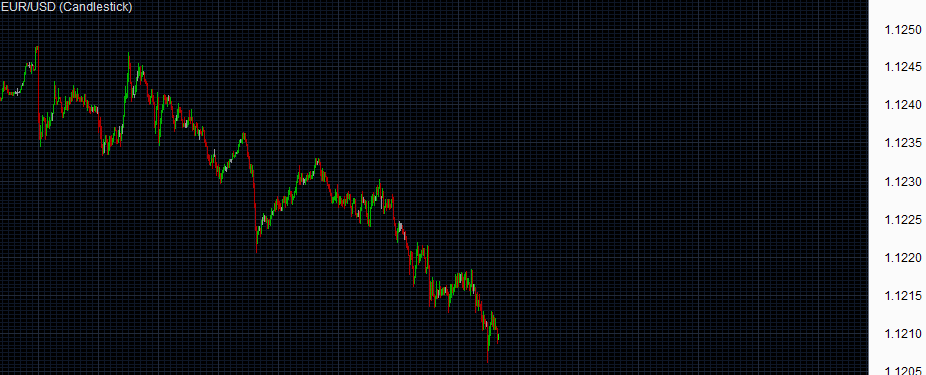
    The euro has seen its optimism wane due to negative data today and the positive data coming from the US.

    eurusd

    The german factory orders plunged by 4.2% after its estimate of 0.3% failed to eventuate. The euro is trading at 12.09 from its high of the London session opening of 12.50.News oulets have reported growing optimism in the US-China trade talks with an estimated 90% completion rate. Whilst the chinese manufacturing PMI is posting a 14 month high, the german factory orders posted a 4 month in a row of contractory results.The german export oriented economy has been hit badly by the US-China trade war.

  • Economic Indicators

    Economic Indicators

    From the book: The traders guide to Economic Indicators

    Economic indicators are very important in economic analysis because they can be used to predict future prices of currencies and forecast the economic and financial outlook for the nation’s economy.The mentioned indicators below are from the USA.

    Coincident Index (metric which shows the current state of economic activity within a particular area)

    • Number of Employees on non-agricultural (nonfarm) payrolls (in thousands)
    • Personal Income less transfer payments (nominal rate in Billions of chained 2005 dollars)
    • Industrial Production Index (2007=100)
    • Manufacturing and Trade Sales (in millions of chained 2005 dollars)


    Leading Index (a measurable economic factor that changes before the economy starts to follow a pattern or trend. Leading indicators are used to predict changes in the economy, but they are not always accurate., Investopedia definition)

    • Average Workweek, production workers, manufacturing
    • Average weekly initial claims for unemployment insurance
    • Manufacturers new orders for consumer goods and materials
    • ISM new orders index
    • Manufacturers new orders for non-defence capital goods (excluding aircraft)
    • Monthly building permits for new private housing
    • Stock prices
    • Leading Credit Index, M2 money supply prior to 1990
    • The interest rate spread between the 10-year Treasury bond and the Federal funds rate
    • Average Consumer expectations for economic conditions

    Lagging Index (is a measurable economic factor that changes only after the economy has begun to follow a particular pattern or trend.

    • Average duration of Unemployment
    • Ratio of manufacturing and trade inventories to sales
    • Manufacturing labour cost per unit of output
    • Average prime rate
    • Commercial and Industrial Loans outstanding
    • Ratio of consumer instalment credit to personal income
    • Changes in the consumer price index for services


    Sites

    • Employment:

    Bureau of Labor Statistics

    • Personal Income and Analysis

    Bureau of Economic Analysis

    • Industrial Production and Capacity Utilisation Report

    Federal Reserve Board

    • Manufacturing, Trade Inventories and Sales

    Department of Commerce

    • New Residents Construction Report

    US Department of Housing and Urban Development

    • Survey of Consumers

    Michigan’s Survey Research Centre

    • Manufacturing Business Report

    Institute for Supply Management

  • The Journey Begins

    Thanks for joining me!

    Good company in a journey makes the way seem shorter. — Izaak Walton

    post