Tag: finance

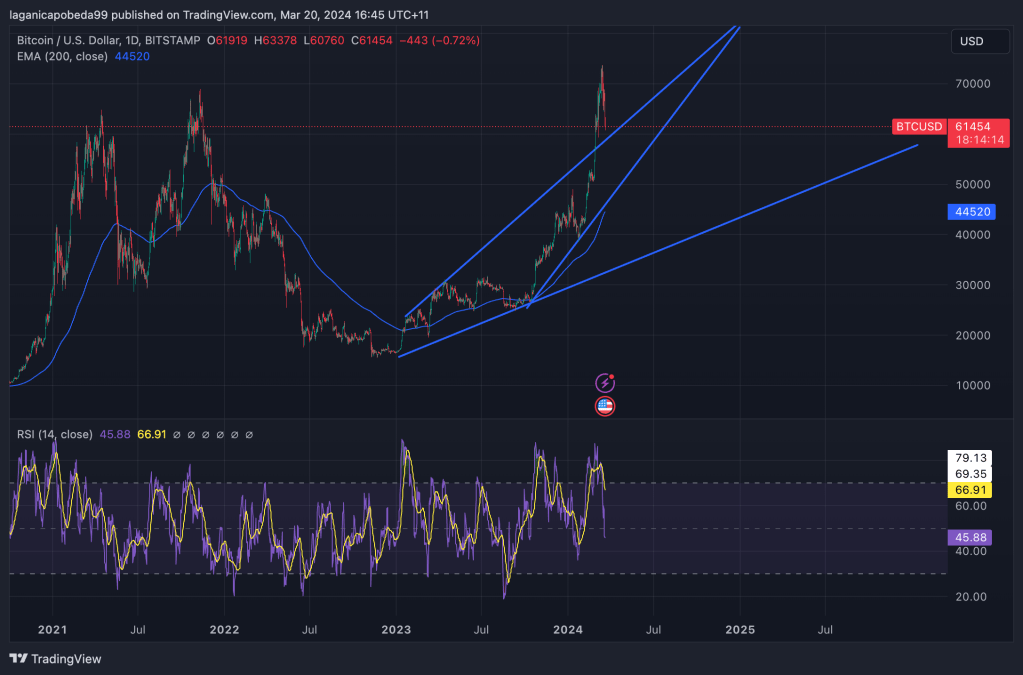
  • Bitcoin is overbought

    The technical reason behind Bitcoins momentum could be due to the fact that its been overbought ,as the trend line suggests in our chart.Its due for a correction to follow the upwards trend from the trend medium price of $55-60,000.

    At its trend peak it hit over $70,000.

    Now it’s priced at $61,450. A significant 15% in the past 7 days. For the investors that bought at the peak , it represents a steep drop in their portfolio.

  • AUDUSD Analysis

    TECH OUTLOOK-Daily chart

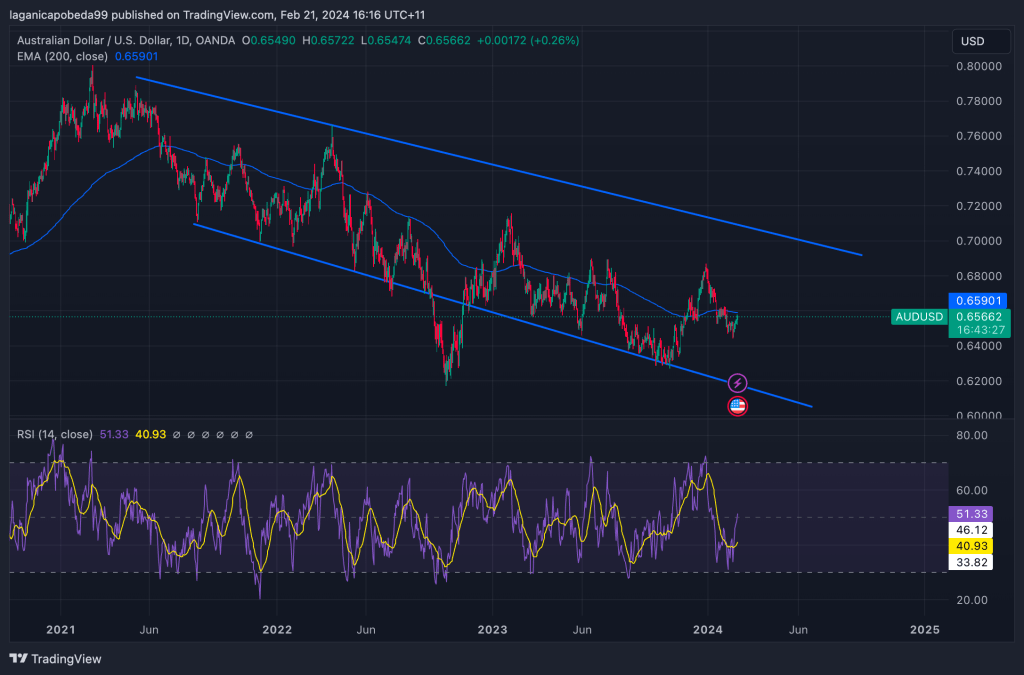
    AUDUSD has been floating around 0.63 to 0.7 range for the past few quarters now. Currently at 0.65 it’s at a steady pace towards the upside but still relatively weak compared to the previous years which averaged 0.75-0.85 . AUDUSD is just under the 200 day exponential moving average now and showing that it’s a good buying opportunity.RSI is at 40, under its 50 mark showing sold out conditions.

    FUNDY

    Currently the AUD has lower international buying power and is cheaper for foreigners to come to Australia and purchase its goods and services boosting export growth .

    Australian GDP has been sluggish , not fully going in line with the inflation rate which was around 7% in 2023 whilst the GDP rose September 2022 to September 2023 to 2.1% nominally.

    Current yearly CPI is at  4.9% whilst the cash rate at 4.35%.

    For America CPI is at 3.1%  , cash rates at 5.5%.

    ASX200 sitting at 7600 , just under its record high of 7700. Lowering the interest rates in the future for both FED and RBA will lift up the Stock Market even further up.

    US 10yr bond yields are up at 4.275% . Quarterly high was 5% and a low of 3.8% . 

    CALENDAR

    Chinese Central Bank has lowered its 5 year Lending rate by 25 basis points to 3.95% to assist with economic growth and stabilise the property market. This week the Feds meeting to see if they will lower rates , the speculation on the Street is that it will have to wait till June with 53% of surgery respondents sure that its going to be then. 

  • Many say the US Dollar is finished and that it will be replaced by emerging market currencies. But how true is that?

    Lets delve in

    • THE USD is the most traded in currency in the world with 44% of the $6 Trillion FOREX market being exchanged in dollars.
    • Global central banks hold around 59% of their reserves in the USD . It provides stability and liquidity value.
    • Majority of the worlds commodities such as oil and gas and metals are priced in the USD.
    • Foreign Commercial banks hold dollars onto their deposits known as eurodollars. This allows savers to hold foreign currency and transact in. Assuring them of their money staying stable and not being eroded by inflation.

    Bretton Woods agreement

    • USD became the worlds reserve currency after WW2 after the Bretton Woods Agreement came in effect with 44 allied countries signatories to that. Foreign currencies became pegged to the price of the dollar and allowed easy conversion between the two. As Euro nations ran out of money they deposited gold into the US banks and got back USD to finance their post war efforts. New institutions such as the IMF and World Bank were created to assist war ruined and poor countries to develop with loans .
    • Trading USD allowed worlds central banks to regulate their money supply
    • Foreign countries would buy US treasuries as a way to store their dollars and keep up with inflation. The nations could redeem their USD for gold for $35 an ounce.All of this demand for USD have increased its value.
    • Many countries saw this unfair as they had to produce goods and services in exchange for them purchasing USD treasury bills to regulate their inflation and foreign trade.
    • In 1971 the US with President Nixon got off the gold standard so they could easier issue debt to finance their growing deficit due to the Vietnam war. Many countries such as France,Switzerland and West Germany also left the system to support their own currencies and demanded their gold deposits back.

    Major currencies

    The main competitors to the USD are the majors YEN,EURO,AUD,CAD ,YUAN,RUBLE,SWISS FRANC,BRITISH POUND .These currencies do provide a valid competitor to the US Dollar.But they cannot replace it long term as majority of these mentioned currencies are exporters and their currency value is volatile.Chinese Yuan gets depreacited by its own central bank to keep the yuan competitive for exports . Russian Ruble is reliant on the price of oil and gas and therefore volatile. Australian Dollar and Canadian Dollar as commodity exporting currencies, the same as Russia, so their price too is reliant on the commodities prices.The Euro is the biggest solid competitor to the USD as it comprises of euro economies which are all different in its own way. One weakness of the euro is that the EU is facing an economic decline ,so its cant be a formidable opponent to the USD.The Swiss Franc is controlled by its central bank who can in times of strength interfere and weaken the currency to keep it from getting too strong.

    So after our analysis we can conclude that the USD is still the king currency and has no competitor.

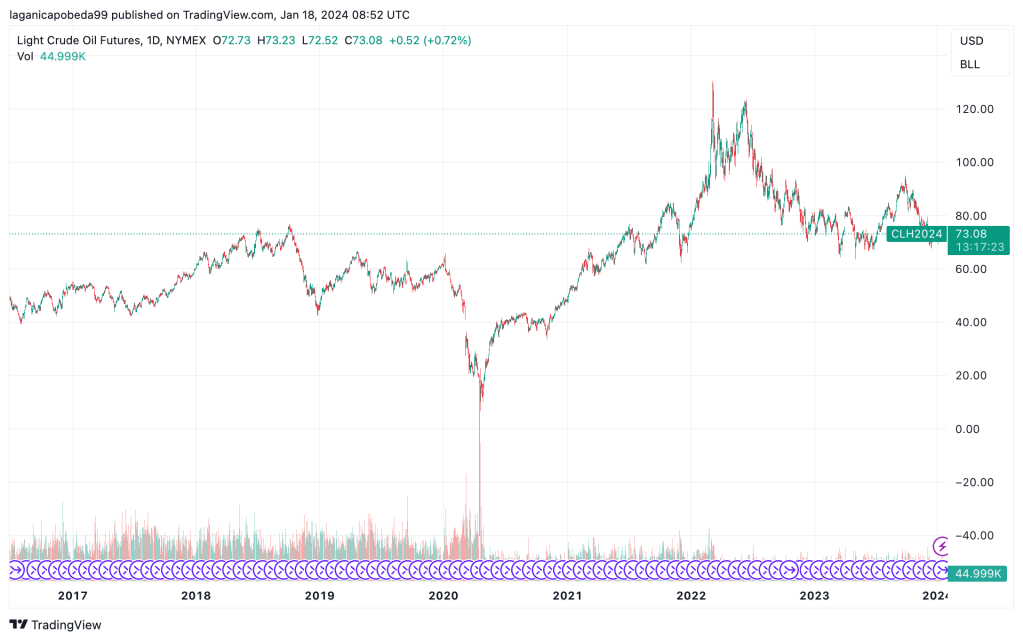
    AUDUSD-CADUSD Comparison with an OIL WTI chart at the bottom.They 2 pairs follow oil price in line

    Links

  • Share Investing basics

    Share Investing basics 101

    What are shares ?

    Shares a parts of a company traded on open stock market exchanges and OTC(over the counter ).

    Each share represents 1 share in a company. Its value is determined by the net worth of the company also called the shareholders equity divided by the total number of shares issued to investors.

    There are different share types 

    Ordinary shares – The most popular one where shareholders are allowed to vote on meetings and receive dividends , but if the company doesn’t issue a dividend they aren’t eligible to demand one.

    Preference shares -Superior to ordinary shares, they have the priority rights to receive fixed dividends and their capital could be returned if the company goes into liquidation.

    Redeemable Preference Shares-Where shareholders have the right to redeem their holdings in case of insolvency and get their shareholder capital back through issue new share issuance or asset selloff.The company has the right to redeem-buy back the shares back from the shareholders in due date .The timing will be laid out in the investors prospectus.

    Convertible Preference shares- Preference shares that give you the right to convert them in the future into ordinary shares.Preference shares give lower dividend that ordinary as they are guaranteed.

    https://www.acra.gov.sg/how-to-guides/shares-and-updating-share-information/different-types-of-shares

    What are dividends ?

    Dividends are payments a company gives out to its shareholders after its makes a profit.They can come in quarterly , semi annually or even annually, most come in semi annual payments. Some companies don’t even pay out dividends to their shareholders as they could have made a loss or are strategically not paying out dividends and just reinvesting their profits . Investors can take advantage of this too through capital gains, as the company’s share price can rise rapidly and allow investors to sell at a future date and keep their profits.

    What’s ex-dividend and record date?

    There are actually four major dates in the process of a dividend distribution:

    • The declaration date is the day on which the board of directors announces the dividend.
    • The ex-date or ex-dividend date is the trading date on (and after) which the dividend is not owed to a new buyer of the stock. The ex-date is one business day before the date of record.
    • The date of record is the day on which the company checks its records to identify shareholders of the company. An investor must be listed on that date to be eligible for a dividend payout.
    • The date of payment is the day the company mails out the dividend to all holders of record. This may be a week or more after the date of record.

    Investopedia

    https://www.investopedia.com/ask/answers/042915/what-difference-between-record-date-and-exdividend-date.asp

    Australian Taxation rules for dividends

    Rules are simple In Australia for your dividends, if you invest in a company that pays its fair share of tax which is around 30% you are eligible to for franking points. It varies on each company ,some companies provide 100% whilst some around 50%.

    Let’s do some examples.

    You have 5000 income from dividends.

    Your franking credits are at a 100%. You receive a 30% dividend imputation credit as your company paid full Australian company tax which gets claimed as a tax refund.

    5000*(30/70)=2143

    Taxable income 5000+2143=7143

    Let’s say you are at the 15% income tax bracket.

    TI*0.15% = 1972 Tax payable

    TP-Franking credits rebate 

    1972-2143= (171) REFUND

    Therefore you are eligible for a tax refund .

    At 32.5% income tax bracket 

    TI = 2321 Tax Payable

    TP-Franking credits Rebate

    2321-2143=178 TAX PAYABLE

    More explanation

    HR Block 

    https://www.hrblock.com.au/tax-academy/tax-on-dividends-investment-shares
  • Argentina on crossroads

    Photo by Carolyn on Pexels.co

    Argentina has chosen a new president with revolutionary ideas to fix their chronic economic problems with inflation which currently hovers around 100% annually. The idea is to follow neoclassical economic principles of privatising assets and having a small government. The new Laissez Faire Incumbent president is facing his Perotist opposition which ran the country the past 19 years , it follows a more Socialist Keynesian principles of a bigger government role in managing the economy, but also one where inflation is rapid due to the governments financial budget solutions to cover rapid deficits with more money printing and debts. Which when accelerated causes high interest rates and run away inflation. It scares away foreign investors, causes deterioration of bond prices and local currency values . The challenge to change this system will be tough , as many government agencies employing thousands of people will need to be closed and the economic system rebooted to follow free market policies of Milton Friedman.At the start an economic shock usually follows with currency devaluation and a recession , but after a year or two the market corrects itself and goes into economic growth .

    Argentina is on the road not taken . How many developed countries do you know that have abolished their Central Banks ?- Not many.

    Questions remain .

    • Will this new economic idea bring an economic improvement?
      • Yes it will definitely invite foreign investment and free market capitalists inside the country that have been put off by the high taxes and government bureaucracy for a long time.
    • Will it make things even worse?
      • It really depends on how abruptly the new economic policies take place and will the vendors and consumers be able to adopt to the new conditions. Dollarisation will devalue the current currency and could cause medium term supply side inflation on the producers . Long term dollarisation could balance out the inflation since the gov central bank won’t issue its own currency anymore.
    • What about Argentinas Economic independence and their ability to have an independent monetary policy.
      • Well it will certainly will as they won’t issue their own currency anymore . They will use a foreign currency where that currency is tied to FED’s interest rates , which are based on the economic performance in the US, not Argentina. So if the latter ever finds it’s self in an economic crisis , it can’t issue and lend its currency to prop up the banks or lower the interest rates, its all going to be done on a limited supply of US dollar reserves held in the Argentine Central Bank and its Treasury . If there isn’t enough dollars to rescue the failing banks , we could be up for a major economic crisis where Keynesian policies are the only rescue .The result of the crisis all depends on the number of dollars available in the reserves.

    All these questions will be answered in a few years time when things unfold .But for now lets try to answer these questions ourselves and create assumptions.

    The economic policy of the new political hierarchy is Laissez Faire compared to the old Keynesian policies of propping up the country through public works and subsidies. The President elect Javier Milei wants to dollarise Argentina and make it the country’s official currency.It will a hard road as the country’s central bank doesn’t have enough dollars in its vaults to buy up all the dollars in the economy and convert them . Miles idea is to gradually phase out the pesos through 2 stages which will take years. Its for the economy to start pricing its goods and services in dollars ,then the Argentine Taxation Office will start collecting dollars in tax receipts and then slowly buy back the pesos from its citizens.The idea also encompasses a privatisation effort to sell government assets to shore dollars into the coffers of the Treasury and bring back Argentine offshore savings back the home nation. But for these ideas to all become true ,the new President has to convince the lower house to support his mad ideas where he only holds a 15% share . That’s not gonna be an easy task.

    Interesting Articles

    Milei’s Path to Dollarization: Riddled with Doubts

    Patrick Boyles analysis of the new Argentine presidents economic ideas