Category: Money

  • Share Investing basics

    Share Investing basics

    Share Investing basics 101

    What are shares ?

    Shares a parts of a company traded on open stock market exchanges and OTC(over the counter ).

    Each share represents 1 share in a company. Its value is determined by the net worth of the company also called the shareholders equity divided by the total number of shares issued to investors.

    There are different share types 

    Ordinary shares – The most popular one where shareholders are allowed to vote on meetings and receive dividends , but if the company doesn’t issue a dividend they aren’t eligible to demand one.

    Preference shares -Superior to ordinary shares, they have the priority rights to receive fixed dividends and their capital could be returned if the company goes into liquidation.

    Redeemable Preference Shares-Where shareholders have the right to redeem their holdings in case of insolvency and get their shareholder capital back through issue new share issuance or asset selloff.The company has the right to redeem-buy back the shares back from the shareholders in due date .The timing will be laid out in the investors prospectus.

    Convertible Preference shares- Preference shares that give you the right to convert them in the future into ordinary shares.Preference shares give lower dividend that ordinary as they are guaranteed.

    https://www.acra.gov.sg/how-to-guides/shares-and-updating-share-information/different-types-of-shares

    What are dividends ?

    Dividends are payments a company gives out to its shareholders after its makes a profit.They can come in quarterly , semi annually or even annually, most come in semi annual payments. Some companies don’t even pay out dividends to their shareholders as they could have made a loss or are strategically not paying out dividends and just reinvesting their profits . Investors can take advantage of this too through capital gains, as the company’s share price can rise rapidly and allow investors to sell at a future date and keep their profits.

    What’s ex-dividend and record date?

    There are actually four major dates in the process of a dividend distribution:

    • The declaration date is the day on which the board of directors announces the dividend.
    • The ex-date or ex-dividend date is the trading date on (and after) which the dividend is not owed to a new buyer of the stock. The ex-date is one business day before the date of record.
    • The date of record is the day on which the company checks its records to identify shareholders of the company. An investor must be listed on that date to be eligible for a dividend payout.
    • The date of payment is the day the company mails out the dividend to all holders of record. This may be a week or more after the date of record.

    Investopedia

    https://www.investopedia.com/ask/answers/042915/what-difference-between-record-date-and-exdividend-date.asp

    Australian Taxation rules for dividends

    Rules are simple In Australia for your dividends, if you invest in a company that pays its fair share of tax which is around 30% you are eligible to for franking points. It varies on each company ,some companies provide 100% whilst some around 50%.

    Let’s do some examples.

    You have 5000 income from dividends.

    Your franking credits are at a 100%. You receive a 30% dividend imputation credit as your company paid full Australian company tax which gets claimed as a tax refund.

    5000*(30/70)=2143

    Taxable income 5000+2143=7143

    Let’s say you are at the 15% income tax bracket.

    TI*0.15% = 1972 Tax payable

    TP-Franking credits rebate 

    1972-2143= (171) REFUND

    Therefore you are eligible for a tax refund .

    At 32.5% income tax bracket 

    TI = 2321 Tax Payable

    TP-Franking credits Rebate

    2321-2143=178 TAX PAYABLE

    More explanation

    HR Block 

    https://www.hrblock.com.au/tax-academy/tax-on-dividends-investment-shares

  • Best strategies to save money (Part 1 )

    Best strategies to save money (Part 1 )

    What can you do to fix your bad spending habits and save money ?- Here are some great strategies to accomplish your financial goals .

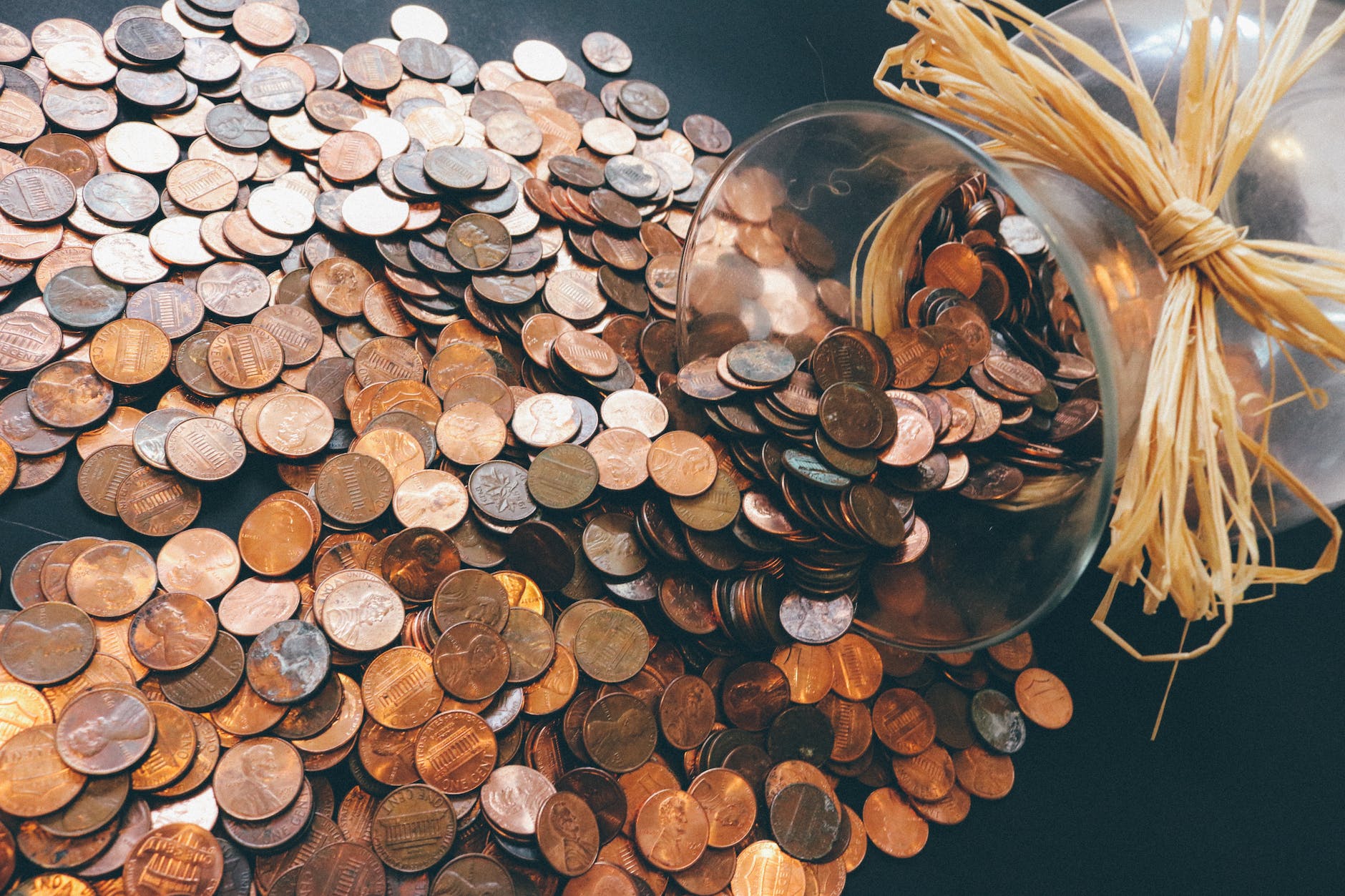
    Photo by Pixabay on Pexels.com

    Strategies

    The biggest barriers towards saving are mental . We are used to shopping impulsively sometimes as stress relief for our busy lives and sometimes you wanna go shopping and spend a little extra for your next party so you can look festive . All this costs money. How do you change this and still have fun in life. We’ll lets get started with some simple strategies.

    First step is to create a goal and work towards it like buying your first home or car. Approximately find out how much you will need and how long it will take you to get there with your current budget . Let’s say it takes a year to save $20,000 for a car . Great !

    Now divide that by the number of weeks in a year which is 52. So approximately you will need $385 a week.

    How do you get to that target if you are already struggling to save?

    Now ask yourself the question . What are my fixed costs in the next couple of months. Let’s say in the next 3 months you will have $10,000 in bills that need to be paid .Your weekly wage per week is $1000 after tax which is around $13,000 for those 3 months. A simple calculation will leave you with savings of $3,000 . Per year approximately you will approximately be able to save $12000. But what about the missing $8,000 for your car obviously you can’t get there within a year you will need 2 years of savings. But before you start saving for your goal , the most important preliminary thing would be to save the $10,000 so you can have a peace of mind and be able to cover your basic lifestyle bills for the next 3 months. So do that first before you start saving for your car or house deposit.

    Where will you get the rest of the missing money to achieve your goal?

    • Start a Side hustle with a goal to earn that extra $150 a week by getting a second job or have your own business . There’s plenty of side jobs to go around such as barista, bartender, landscaper, labourer ,security guard. If you work Monday to Friday , you can use your weekends to cash in instead of partying . Sundays are always paid double ,so it will work to your advantage.
    • Use your car or house to earn extra income . With the car you buy , you can try driving for Uber or Lyft , earn an extra income and get some money back on your new car through tax depreciation.You can also start a side hustle in your house or garage, like baking, fixing or cleaning your neighbours cars or lets say growing pot plants in the yard starting from seed and selling them off when they grow bigger.The list goes on …You can also lease out you unused space like rooms or garages to potential renters and earn an extra cash income.
    • Lower your costs and live more minimalist. Are you dining and wining way too often and impulse shopping ? Well, now is a time to cut it down, make food at home and watch your account grow